
Hyundai i30
Features/Opinions, Reviews

Hyundai i30 Review & Features

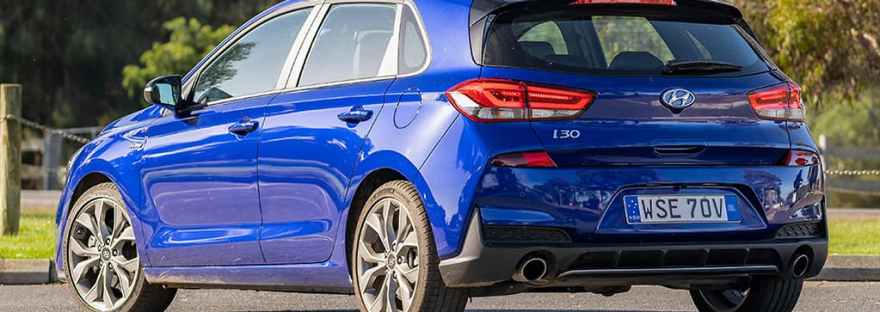
Hyundai i30 hatchback has been developed and designed for Hyundai Motor Europe Technical Center in Rüsselsheim, Germany, the new-generation Hyundai i30 is a unique form of language development for Hyundai, “Liquid Sculpture” – a design typical DNA – is the ability to choose of four engines, all six options for the electricity and CO2 emissions of 100 g / km thanks to the unit, very effective so far, 1.6-liter diesel.

Image of Hyundai Consumers

Hyundai i30 hatchback has five three-year warranty on the Hyundai. The package was awarded, Hyundai i30, a five-year warranty with unlimited miles, a road with five years and five years of clinical trials of the car. New Hyundai i30 is expected that the next generation to the upward trend that contributes to the success of future sales to be maintained, increased awareness and improve the image of Hyundai consumers in Europe. The size of the new generation of Hyundai i30 will help the market again.

The new Hyundai i30 is available with three petrol engines and three diesel power in 2012 I30 90 to 135 ps. Two types of fuel play an important role in the C category Union, Hyundai i30 diesel, which accounts for 52% and 43% of fuel sales. Overall, Hyundai expects a 50-50 split between sales of diesel Hyundai i30. Hyundai believes that the Hyundai i30 1.6 liter diesel with variable geometry turbo (VGT) “U-II is the most popular machine in this area. With the creation of 128 hp at 4000 rpm, the engine will accelerate the modernization of the next generation of Infiniti I30, Infiniti I30 that the acceleration from 0-100 km / h in 10.9 seconds and top speed is 197 km/hr. Infinity I30 petrol engine ensures a balance between economic performance. For example, a new generation of January 1 Hyundai I30 Hyundai 0.6-liter GDI engine Gamma Correction (direct injection), 1,591 cc, 164 hp units tenaga135 Nm of torque.

The new Hyundai i30 hatchback with the latest technological opportunities for active and passive safety protection for maximum passenger protection. Active safety, owned Hyundai i30 hatchback includes ESP (Electronic Stability Program), ABS (antilock brakes), VSM (Vehicle Stability Management) and emergency stop signal. Passive safety is the next generation of the sedan version of Hyundai i30 equipped with six airbags – front and side curtains – driver’s knee airbag is optional.

Security, available for Hyundai i30 improves security in the company expects the new model has an excellent five-star Euro NCAP test.

Image By: carsales.com.au
Hybrid Cars
Car News

What are Hybrid Cars

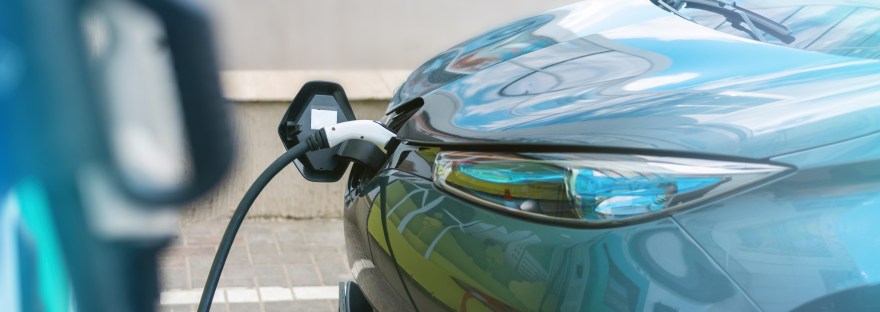
Hybrid cars are essentially any car that uses two or more power sources in unison to provide propulsion. A car running on gas alone for propulsion is not a hybrid. In this case, the car’s power source for propulsion is solely gasoline. The car’s engine is fed gas into the engine, turning the transmission which then turns the wheels.

The majority of currently available hybrid cars use both gasoline and electricity. Due to this effective combination of two differing power sources, these vehicles are correctly termed hybrid cars. A car could, theoretically, use three or more power sources for propulsion and still be considered a hybrid car.

Hybrid cars are often easy to spot. Sleek and curvaceous, hybrid cars are a modern-day marvel. Being the technical innovation hybrid cars are, their looks obviously reflect modern taste and style. It is doubtful that one would see boxy-looking hybrid cars.

Hybrid cars differ greatly from both gasoline and electric cars. Electric cars are similar to their gasoline ancestors in that they both get you from point a to point b using propelled wheels. They differ, however, in how the transmission is powered. Instead of gas, electricity from batteries turns the transmission, which turns the wheels of the electric car.

Hybrid cars are somewhat of a compromise between the expensive and harmful gasoline cars and the slower yet environmentally conscious electric cars. Hybrid cars do not near the amount of gas a pure gasoline powered car does and yet is nearly as powerful. Although not as cheap to power as an electric car, hybrid cars trump their electric counterparts in the performance department.

The Wave of the Future

Using a gasoline and electric powered motor, hybrid cars are the best of both worlds. Hybrid cars don’t require near the amount of gas cars powered solely by gas do. They also don’t depend solely on electricity to propel the wheels like electric cars do. Hybrid cars are very practical for these times. In a day and age where power and speed is vital, purely electric cars just don’t cut it. With the current worries concerning gasoline emissions and their negative effect on the environment and the limited availability of oil resources, hybrid cars are easier on the wallet and environment when compared to vehicles powered by gasoline, alone.

Hybrid cars are starting to catch on and given their advantages over gasoline and electric only powered vehicles, hybrid cars are becoming increasingly popular in consumers’ eyes. Like anything written in history, however, nothing used globally changes overnight whether these changes should occur or not. However, be on the lookout for these hybrid cars in the near future. If hybrid cars are indeed the wave of the future, this will not be a hard task.

In lieu of all this, hybrid cars aren’t the norm just yet. Purchasing a hybrid car is a decision that should be fairly easy to make for one’s next car purchase. Hybrid cars are economical, efficient, and environmentally friendly. Definitely worthy of one’s consideration no matter what his or her tastes may be, it would be a safe bet to say the majority of vehicles on the road a decade from now, will be hybrid cars.